Loading... Please wait...

Blog

Slotted Hoods in Dust Collection

Posted

Slotted Hoods for Dust Collection: Improving Capture Efficiency for Pluming Dust

In many manufacturing environments, dust does not remain contained at the source. Instead, it rises and spreads into the air as a visible plume, making it difficult for traditional pickup points to capture effectively. In these situations, slotted hoods are one of the most effective solutions for controlling airborne contaminants and improving the performance of industrial dust collection systems.

Facilities throughout the Chicago manufacturing region increasingly rely on engineered slotted hood designs to control pluming dust generated during processes such as grinding, bagging and filling, weigh stations, mixing, and material handling.


What Is a Slotted Hood in Dust Collection?

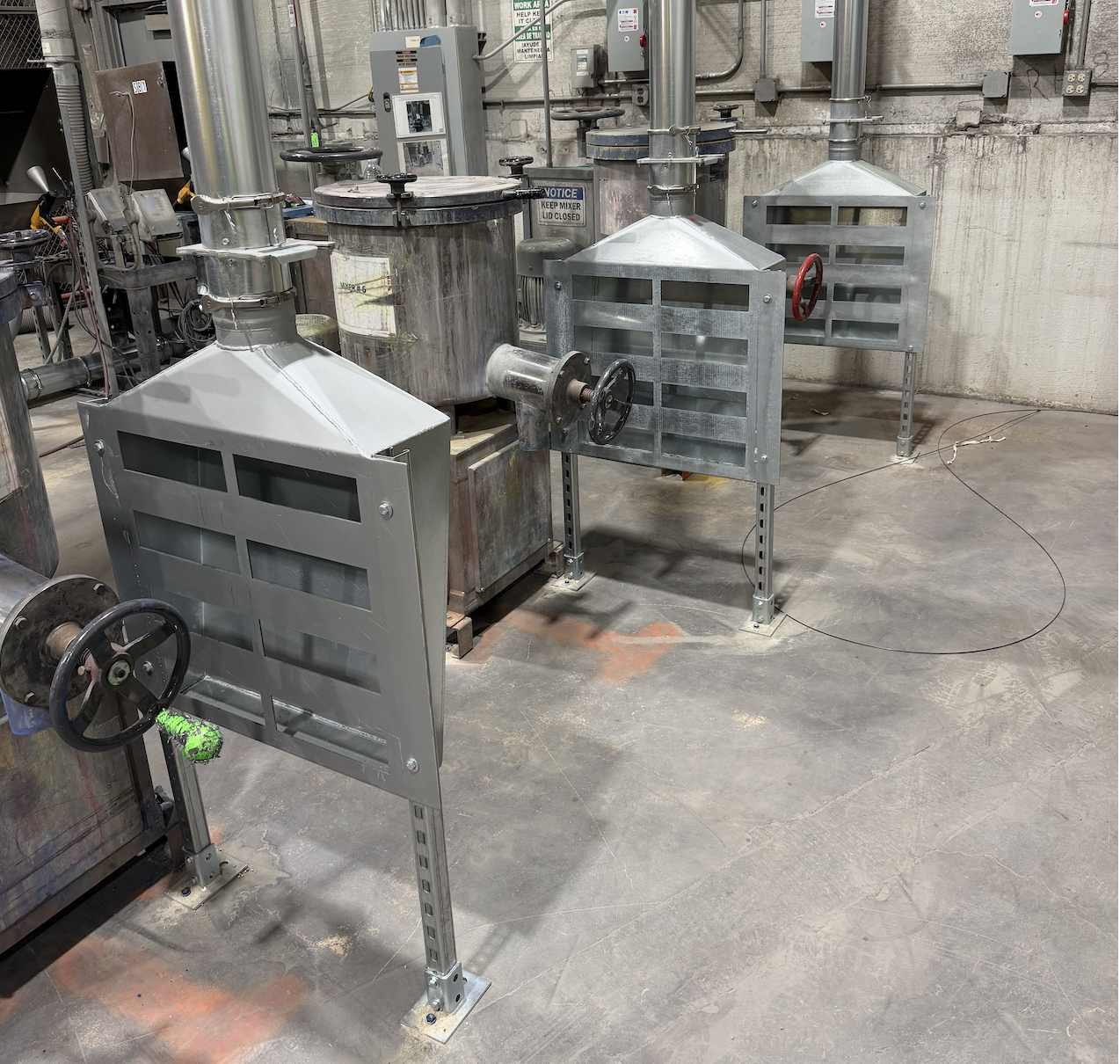
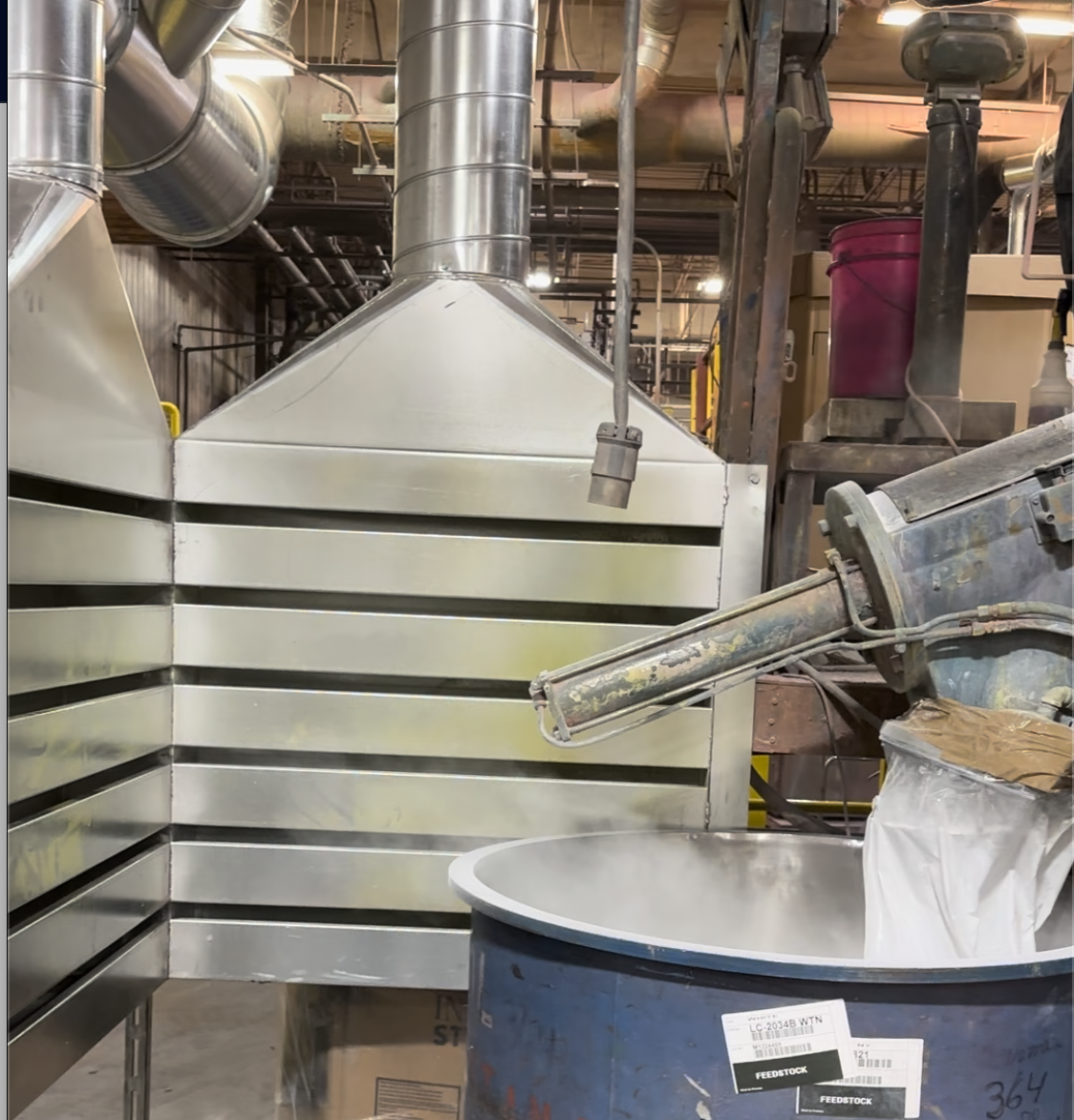
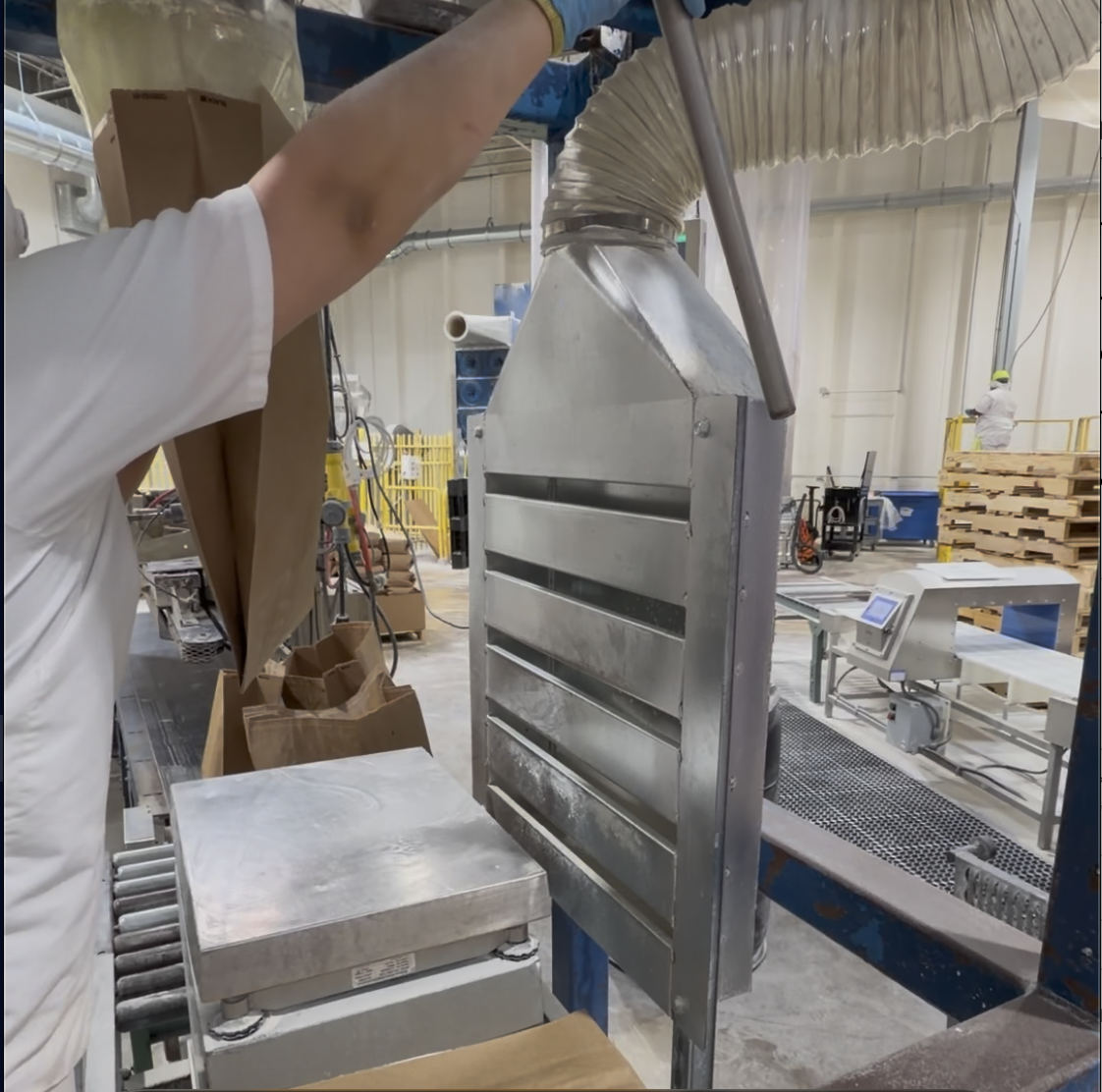
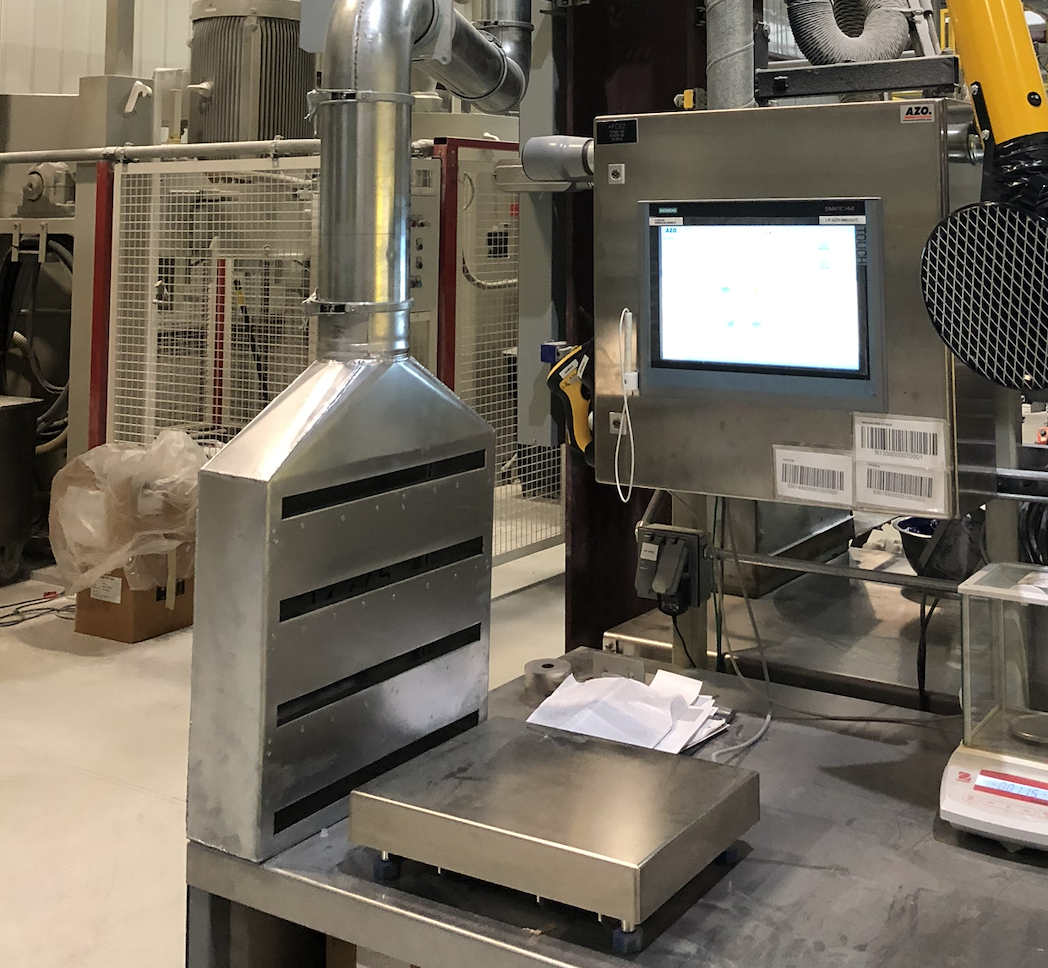
A slotted hood is a type of local exhaust ventilation hood designed with a long narrow opening (slot) that evenly distributes suction across the length of the hood. Instead of pulling air from a single round opening, a slotted hood creates a uniform capture velocity along the entire slot, allowing dust to be captured more effectively as it rises or drifts away from the process.

This design is particularly effective for applications where dust naturally plumes upward or outward, making traditional pickup points inefficient.


Why Pluming Dust Is Difficult to Capture

Certain industrial processes create airborne dust that rises quickly due to heat, velocity, or turbulence. Examples include:

  • Grinding and finishing operations

  • Thermal cutting processes

  • Material transfer points

  • Sanding and polishing stations

  • Batch mixing operations

When dust forms a plume, it can escape traditional point-source pickups and disperse throughout the facility. Over time, this leads to:

  • Poor indoor air quality

  • Dust buildup on equipment and surfaces

  • Increased maintenance costs

  • Potential exposure risks for employees

Proper hood design is critical to controlling these airborne contaminants before they spread through the work environment.


How Slotted Hoods Improve Dust Capture Efficiency

Slotted hoods are specifically engineered to maximize capture velocity and airflow distribution. When designed correctly, they provide several important advantages:

1. Even Airflow Distribution

The narrow slot ensures that suction is distributed evenly across the hood opening, preventing dead zones where dust could escape.

2. Improved Capture of Rising Dust

Because the slot spans the length of the dust source, the hood can intercept airborne particles as they rise in a plume.

3. Lower Airflow Requirements

Compared to large open hoods, slotted hoods often require less total airflow (CFM) to achieve effective capture, improving energy efficiency.

4. Better Source Containment

Slotted hoods can be positioned closer to the dust-generating process, increasing capture effectiveness and reducing facility-wide contamination.


Engineering Considerations for Slotted Hood Design

To perform effectively, slotted hoods must be carefully engineered as part of the overall dust collection system. Key design considerations include:

  • Proper slot width and length

  • Balanced airflow along the hood

  • Correct capture velocity for the process

  • Optimized ductwork design

  • Adequate dust collector capacity

Poorly designed hoods can result in uneven airflow, reduced capture efficiency, and unnecessary system energy consumption.

PCS air quality experts often design these hoods and extraction networks to comply with OSHA PEL limits (Permissible Exposure Limits), which are the maximum amount of a hazardous substance that an employee can be exposed to during a work shift. These limits are established and enforced by the Occupational Safety and Health Administration (OSHA) to protect workers from harmful airborne contaminants such as dust, fumes, vapors, and mists. The U.S. Food and Drug Administration (FDA) mandates strict measures to prevent cross-contamination in manufacturing facilities to protect consumer safety. Cross-contamination occurs when undesired substances—such as dusts, allergens, pathogens, chemicals, or drug residues—are unintentionally introduced into a product during processing, packaging storage, or handling.


Integrating Slotted Hoods With High-Efficiency Dust Collectors

For maximum effectiveness, slotted hoods must be integrated with properly sized dust collectors and duct systems. High-performance filtration systems such as those manufactured by Donaldson Torit are commonly used in industrial facilities to capture fine dust and particulate generated by manufacturing processes.

A well-engineered system ensures that captured contaminants are safely transported through the ductwork and removed from the airstream before being recirculated or exhausted.


Benefits of Proper Dust Capture in Manufacturing Facilities

When slotted hoods are properly designed and installed, manufacturers can experience significant operational improvements, including:

  • Improved indoor air quality

  • Reduced dust accumulation on equipment

  • Lower facility maintenance costs

  • Increased employee safety

  • Better overall dust collection system efficiency

For manufacturers in the Chicago region and across the Midwest, investing in properly engineered dust collection hoods helps maintain cleaner production environments and more reliable industrial operations.

Fire Protection in Dust Collectors

Fire protection on dust collectors is crucial in industrial settings where dust and other particulate materials are generated and collected. Dust collectors, also known as baghouses or dust filtration systems, are used to remove airborne dust and particulate matter from industrial processes, preventing them from polluting the surrounding environment and posing health risks to workers.However, [...]

Read More »


Why Mist Collection?

Industrial mist collection is important for a number of reasons, including: Health and Safety: Industrial processes that produce machining mist can create hazardous working conditions for employees. By collecting these particles, mist collection systems can help improve air quality and create a safer work environment. This mist can contain harmful substances such as metals, hydrocarbons, and other [...]

Read More »


Fume Extraction in Robotic Weld Cells

CFM stands for cubic feet per minute, which is a unit of measurement for air flow rate. CFM is a commonly used term in dust, mist and fume collection design and HVAC (heating, ventilation, and air conditioning) and other applications where air movement is important.To calculate CFM, you will need to know two key values: [...]

Read More »


Where to buy Donaldson Dalamatic Dust Collectors and Filters

The Donaldson Dalamatic dust collectors are extremely versatile units that can be utilized on many different types of applications. The key to the Dalamatic dust collector design is the Dura Life envelope shape insertable filter. This filter, when pulsing during the cleaning cycle, moves in a wave design that creates a ‘pop’ that dislodges the [...]

Read More »


How Do Industrial Dust Collectors Work?

This simple question is asked by many PCS customers on a daily basis. Most companies are familiar with the concept of blowers and ducting, but integrating a dust collection system and understanding all of its components can be confusing. Hopefully this article provides some clear, concise understanding about the inner workings of a dust collection [...]

Read More »


How to Prevent a Combustible Dust Explosion

Are my facilities and employees protected from the dust hazards created from my manufacturing process? Is my dust flammable or combustible? Do I have the proper measures in place to prevent risky occurrences or manage my hazardous dust? If you are asking these questions, you are not alone. With OSHA tightening down on restrictions, NFPA [...]
Read More »


Hazards of Woodworking & How to Remove Wood Dust

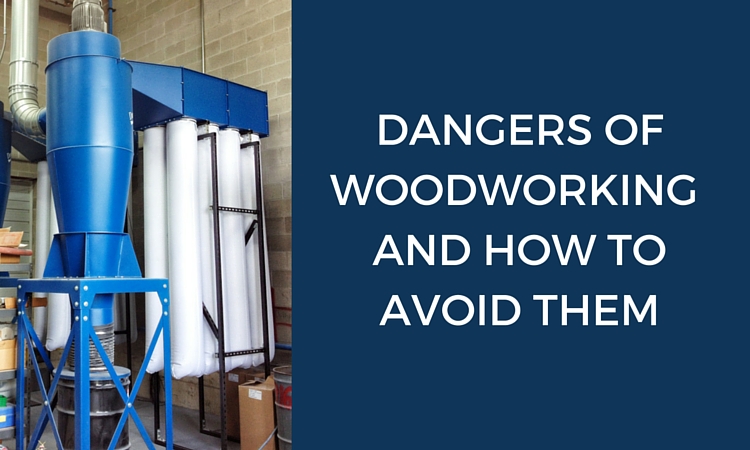
Dangers of Woodworking and How to Avoid Them Woodworking can present many different dangers through harmful wood dust that's produced in many facilities. They could start fires through combustion or injure employees through inhalation over long periods of time. The hazards of wood dust make it necessary to remove as much of it as possible from the work environment. Here are [...]

Read More »


Buying Guide to Dust Collector Systems

It can be difficult to find the best dust collector system for your facility, but this guide should help you decide on the best model. There are several elements you should consider when shopping for a dust collector.Common TerminologyTo help you find the ideal dust collector system, there are a few common terms with which [...]

Read More »


Industrial Dust Control & Elimination Equipment for Manufacturing Processes

Many different types of industrial processes produce dangerous levels of industrial dust that can present a health hazard for employees and potentially damage equipment. Combustible dust is a particularly dangerous hazard that can cause serious injury to employees or even death if an explosion occurs. To help avoid the risks associated with industrial dust, facilities [...]

Read More »